
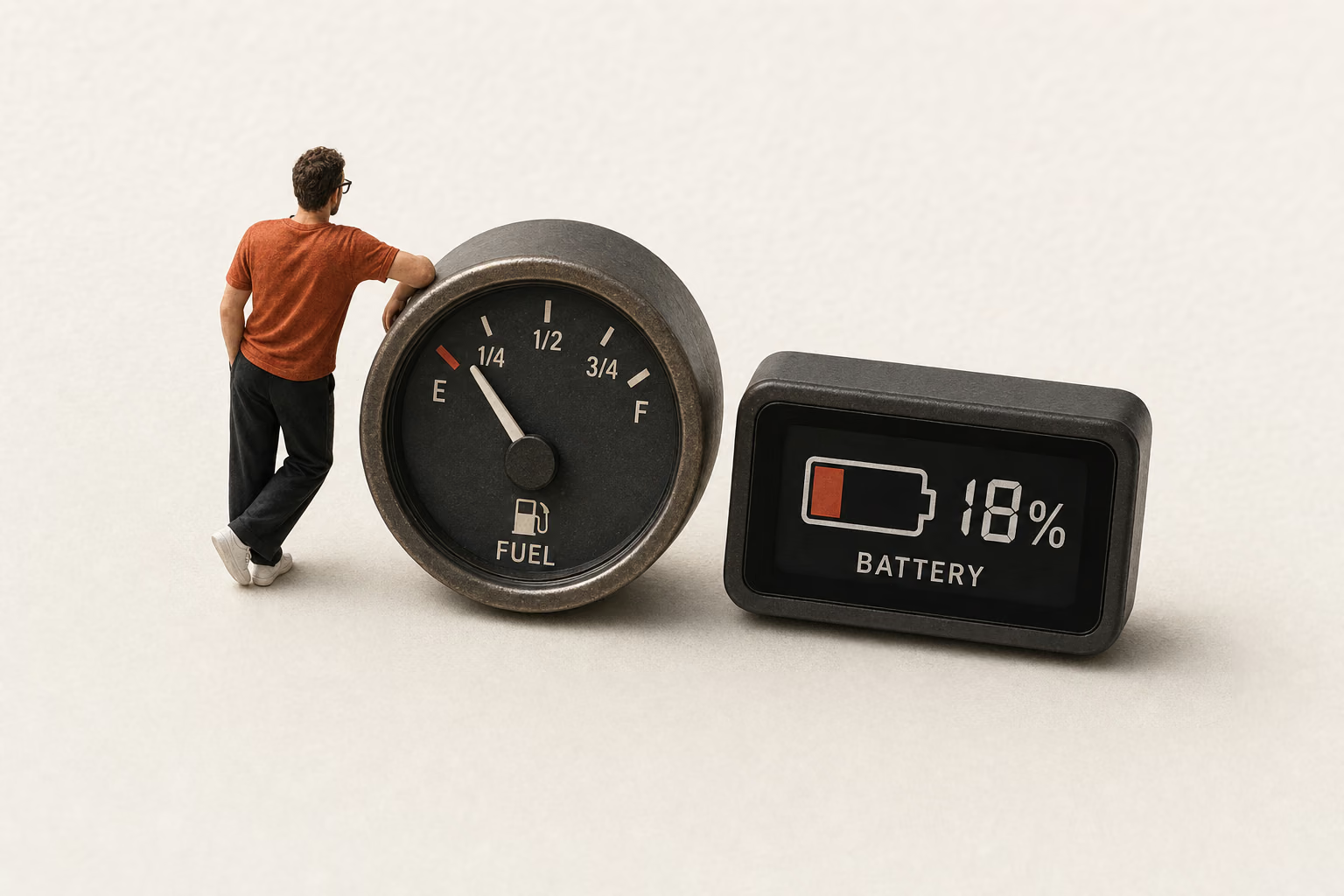
I looked at my electric car's dashboard and saw 35% battery. Immediately, my chest tightened. I was 40 kilometers from home, and I started calculating whether I'd make it. Should I find a public charging station? What if I get stuck?
Then I checked the actual range: 80 kilometers remaining. More than double what I needed.
This happens constantly. The percentage creates stress that the actual range doesn't justify. 18% battery in my car might still mean 60 kilometers of range. 5% could be 40 or 50 kilometers. But the number itself triggers anxiety because of how we've been conditioned by every other device we own.
TL;DRBattery percentages in electric cars trigger anxiety because phones and laptops trained us to panic at low numbers, even though 18% in a car might still mean 60 kilometers of range. Electric cars should ditch the battery icon and percentage display and go back to the simple segment-based fuel gauge that gas cars used for decades.
The Phone Problem
We carry phones and laptops that train us to panic at low battery percentages. 18% on your phone? You're probably not making it through the day. 35%? Better find a charger soon. This conditioning is so deep that seeing those same numbers in a car triggers the same response, even though the context is completely different.
An electric car battery is massive compared to a phone. 5% of an EV battery is equivalent to dozens of fully charged phones. The percentage doesn't mean the same thing, but your brain doesn't care. It sees the number and reacts.
How Gas Cars Did It
Traditional cars had simple fuel gauges—either a semi-circle or a horizontal bar divided into quarters. You'd glance at it and see: full, three-quarters, half, quarter, nearly empty. That's it. No precise percentage, no number that made you calculate exactly how much you had left.
Some manufacturers like Audi used a narrow horizontal rectangle instead of the semi-circle, but the principle was the same: show roughly how full the tank is using segments, not percentages.
This worked because it matched how people actually think about fuel. You don't need to know you have exactly 37% of a tank. You need to know if you're fine, should fill up soon, or need to fill up now.
What Actually Matters
The only number I care about in my electric car is kilometers remaining. That's the information that actually determines my decisions. Can I get home? Do I need to charge? The percentage is irrelevant noise that just creates stress.
Every person I know who drives an electric car agrees when I mention this. Some didn't even consciously realize they were experiencing unnecessary anxiety until I pointed it out. They just felt it.
The Solution
Go back to the segment-based display. Remove the battery icon, remove the percentage, and show people what they need to know: roughly how much charge they have using the same visual language that worked for decades in gas cars.
Electric cars are already different enough from gas cars. The charging infrastructure is still sparse—there are far fewer charging stations than gas pumps. I charge at home specifically because I don't want to deal with public charging stations. The last thing we need is interface design that adds psychological stress on top of practical challenges.
Stop making me think my car is dying when it has plenty of range to get home.