I was at a friend's house a few years ago. Living room, evening, just sitting and talking. I couldn't relax. The conversation was fine, the space was comfortable, but something felt off.
When I got back home to my own living room, I realized what it was. The light. Their light was very cold—not broken, not flickering, just the wrong color temperature. Bright white, almost blue. My body had been getting signals that it was midday, time to be alert and active, while my brain knew it was evening and wanted to wind down.
They didn't notice. To them, that's just what light looks like.
TL;DRMost homes have fixed light temperature—cold in the bathroom, warm in the living room, same all day. But your needs aren't fixed. At 7 AM you want bright, cool light to wake up. At 10 PM you want dim, warm light to wind down. Fixed lighting can't do both. Smart bulbs that adjust temperature throughout the day help your home work with you instead of against you. Start with bulbs that do both temperature and colors. Temperature is essential, colors are optional but can create moments worth having. Once you have them at home, you'll notice at your friends' visits when they don't.
I Thought I'd Use Colors
Ten years ago I was renovating my apartment. I wanted to control lights from my phone and use motion sensors instead of wall switches. I installed Philips Hue bulbs. Not because I understood lighting. I just thought it would be cool to change colors, set scenes, maybe have the lights pulse with music.
I almost never used the colors. Maybe a few times to show off before a visit. What I ended up using every single day was temperature adjustment.
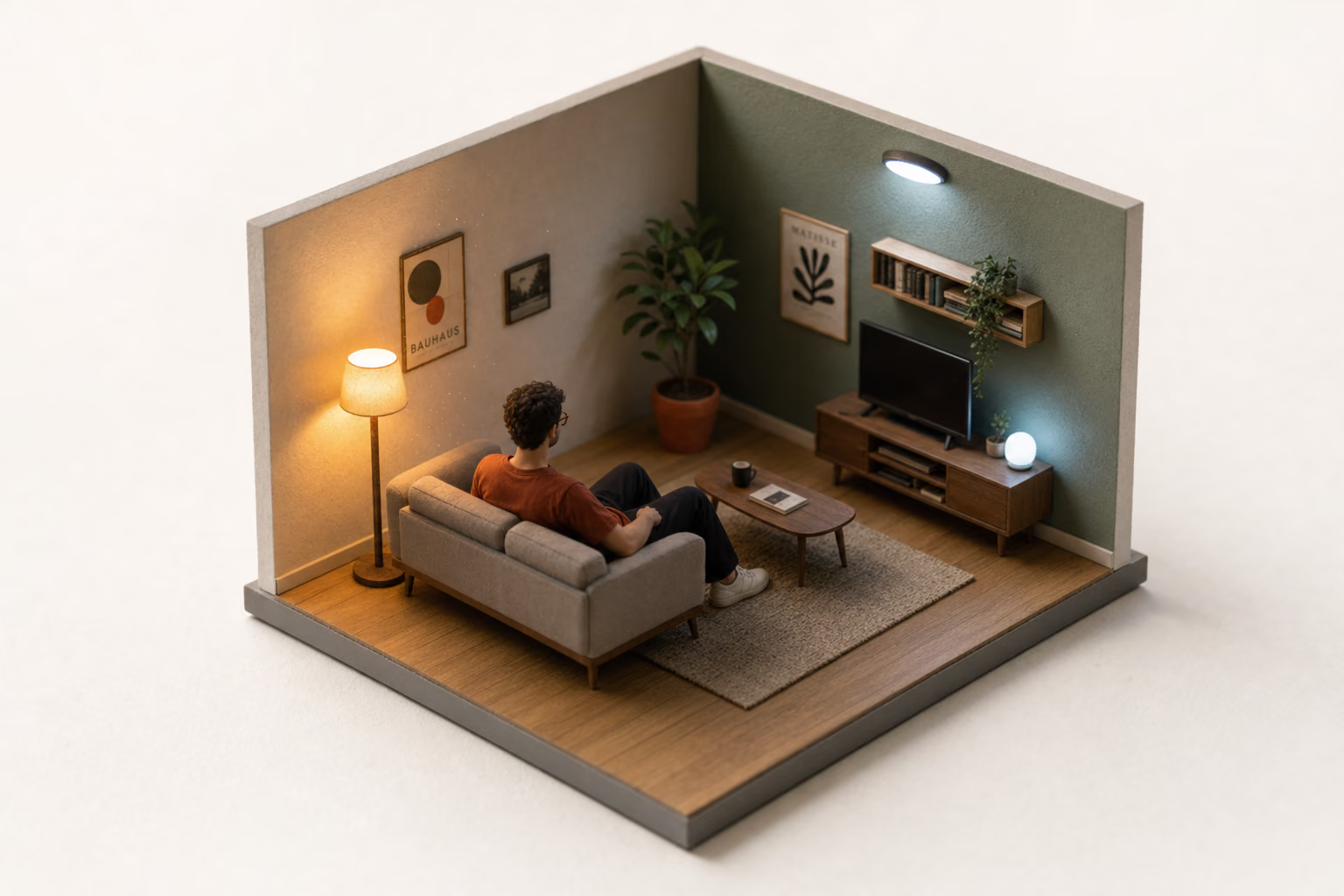
In the living room, warmer light turns on an hour before sunset, even if it's still bright outside. In the bedroom, the warmest light with low brightness starts at sunset—a signal that this room is for sleep. In the bathroom and the kitchen, cold light on a motion sensor. That's it.
When we moved to a new house, I went overboard. We have 100+ smart bulbs and lights now, spread across every room. That's excessive, but here's what it does: the entire house shifts throughout the day automatically. Morning: cooler, brighter. Evening: warm, dimmed. Night: very warm, very dim.
I don't think this fixed any specific problem. I didn't have insomnia before, and I don't sleep dramatically better now. But the mood is different. The home feels like it's helping me wind down instead of keeping me alert.
Before smart lighting, I'd walk into a room at night and turn on a light. Whatever was installed, that's what I got. Bright white, same color temperature regardless of time. It worked, technically. But it wasn't helping.
The Hacker's Den Exception
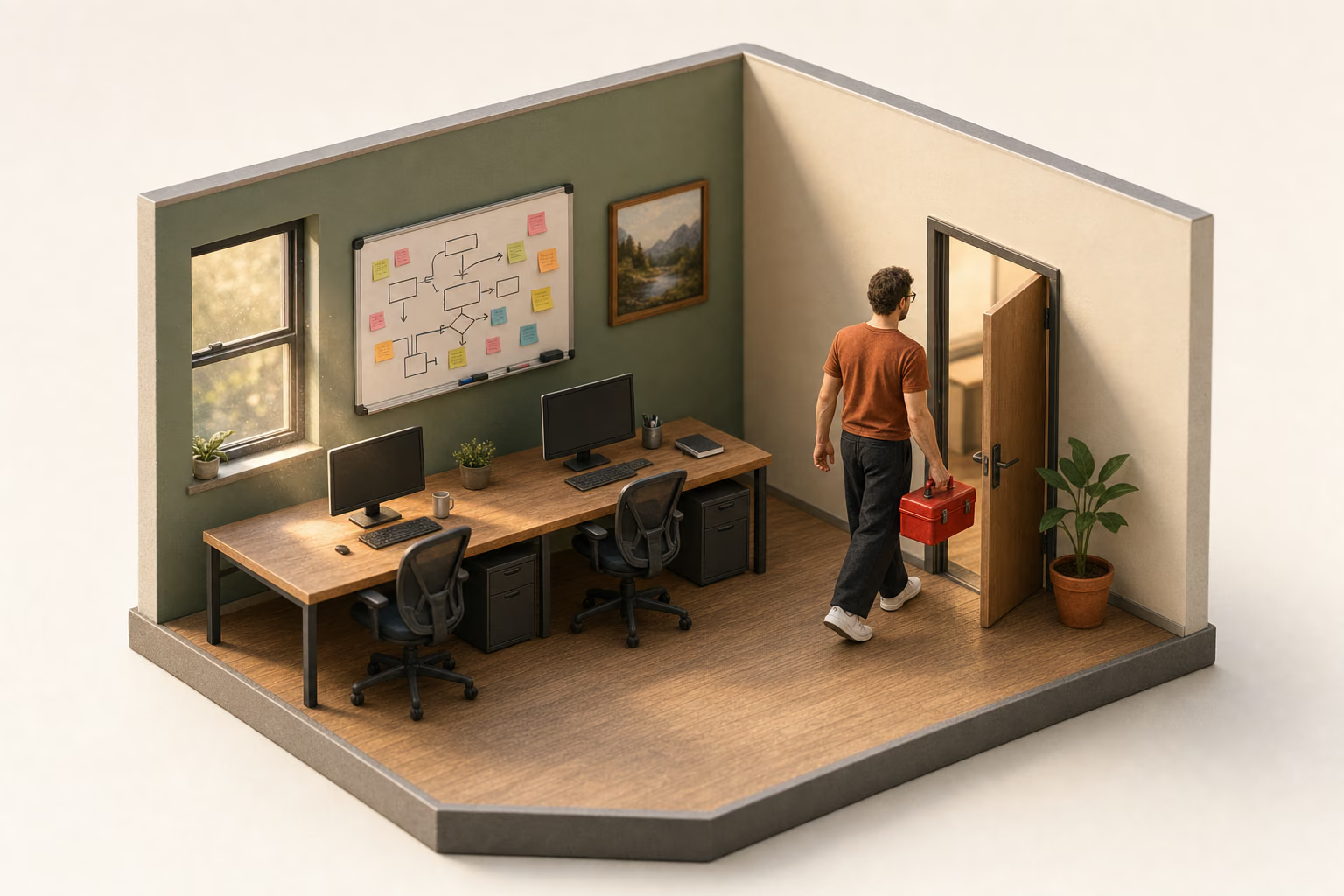
My small office has eight spotlights, one large central light, and a small desk lamp. Up to 12,000 lumens in 15 square meters. That sounds insane.
I don't believe you can over-light a room with smart bulbs. If it's too bright, you dim it. If you need more, you add it. The flexibility is the point.
But here's where colors actually matter: when I sit down at my computer at 8 PM and warm light isn't enough anymore, I switch to Miami. It's a preset mode from Philips that floods the room with deep blue, salmon pink, and flamingo shades. It gives me energy when I know I should probably stop. One last breath, one last swing of the hammer before I close everything for the day. It ends the day on a positive wave. Ideally with music playing at full volume.
What Actually Matters
The bedroom is my favorite place in the house. Not because the walls are painted differently, or the furniture is nice, or we have special bedding. We don't.
It's the two bedside lights that turn on automatically in the evening. That's it. There's safety there. I'm home there. No fear. My body knows it can rest.
Light and brightness do that. Not paint. Not furniture. Light.
Why Fixed Lighting Doesn't Work
Most homes have the same light temperature all day. Cold white in the bathroom, warm white in the living room—morning, afternoon, evening, doesn't matter.
But your needs aren't fixed. At 7 AM you want bright, cool light to wake up. At 10 PM you want dim, warm light to wind down. Fixed lighting can't do both.
Historically, people sat around fires in the evening. Not the sun. Our brains are wired for warm, orange light at night—it signals that the day is ending. Cold light signals midday. That's useful at 8 AM, less useful at 10 PM when you're trying to relax.
If I were starting from scratch, I'd start with mixed bulbs—the ones that do both temperature and colors. That's what everyone should start with. Temperature adjustment is essential. Colors are optional, a bit of an indulgence, and significantly more expensive. But if you find that one moment like my Miami mode that makes it worth it, expand to more rooms. If not, temperature alone is enough.
Fixed lighting temperature doesn't work. Not because it's broken, but because your needs change throughout the day. If your home lighting can't adapt, it's working against you.
You probably don't notice. But once you have these bulbs at home, you'll notice it at your friends' visits when they don't.