
Right now Claude Code shows me 25 open conversations. In 24 of them it's my turn.
None of them is hard. The switching is. I come back to a conversation and I don't remember where I was or what I've already seen. So I look at all of it again.
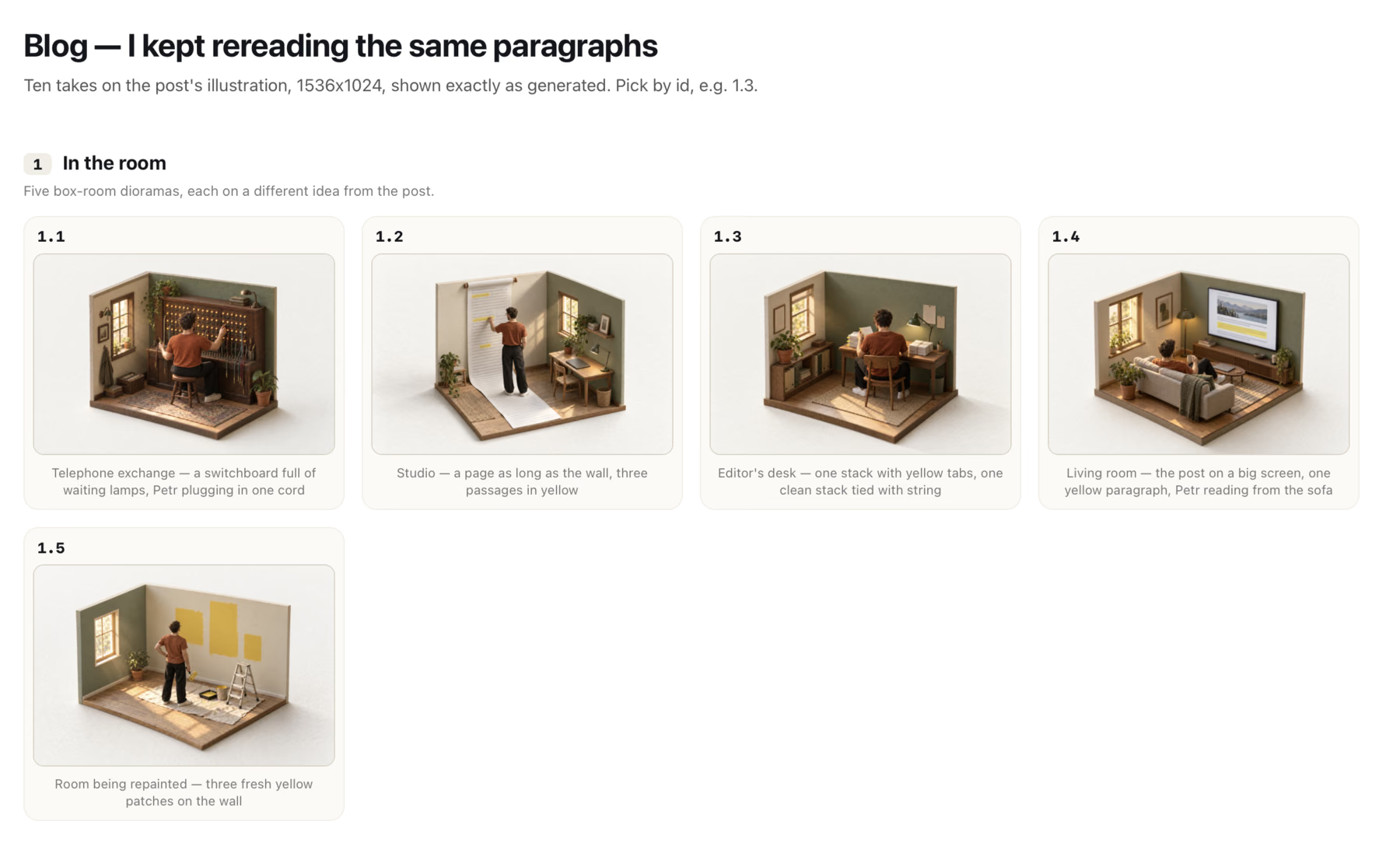
There's a piece of advice I keep seeing for this, and I agree with it completely: have Claude put its output on a web page, a plain index.html you open in the browser, not only into the chat. Structured, with pictures, something you can scan. I use it all the time. Today Claude generated 15 variants of one illustration and built a page with all of them next to each other. I answered with a number, 2.4, and that was the whole decision.
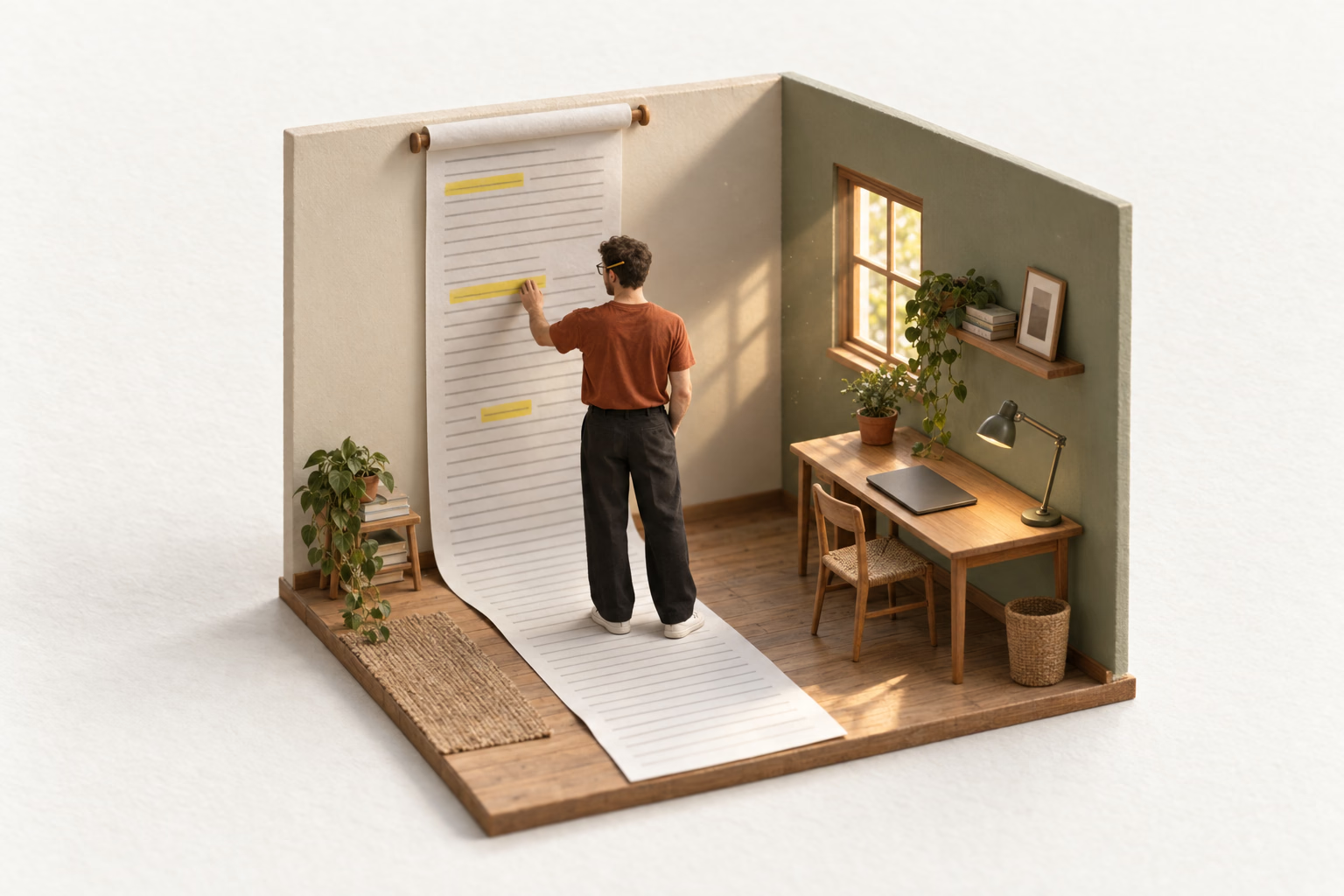
This is what it looks like, the selection I get back. This is the one for this very post, and 1.2 is the picture at the top.
I keep improving my flows and systems. I look for the parts that slow me down or take my energy. Writing content is one of them, and writing blog posts is a part of that.
TL;DRI read my blog drafts on a local copy of my site, and since today everything Claude changes in a draft stays yellow until I say it's fine, so I no longer reread the parts I already agreed to.
Six minutes of talking
I write for two blogs, this one and the one for Edicek. A post on either starts the same way. I talk about the topic for four to six minutes into Wispr Flow, without stopping. Claude writes the first draft from that. First it has to go through my older posts, 100 of them on this blog, and through the guidelines for how I write and in what tone.
Then I go do something else.
When I come back and start reading, I have a comment by the second sentence. Sometimes by the first. I say it out loud, keep reading, keep commenting, and get to about the middle of the post.
Claude needs a while to work all of that in, so I leave again. And when I come back, I start from the top. The same paragraphs. After the next round, the same paragraphs again.
Read it where it will live
One thing made this a lot better. I stopped reading drafts as Markdown files.
Claude starts my site on my own computer and I read the draft on the page where it will be published, with its illustration already in place. I'm not checking a file anymore. I'm reading a post, the way you are right now.
It didn't fix the rereading, though. A rendered page looks finished from top to bottom. Nothing on it says what changed since I was last there and what didn't. So I started from the top again, because I couldn't see what Claude had fixed and what it hadn't.
Yellow
Today I was reading a draft like that in Safari. I sent three comments in three minutes. With the third one I added a rule: from now on, when you change something in a blog post, give it a yellow background. And keep it yellow until I tell you that part is OK.
The next time I opened the page, three passages were yellow. Those three were all I had to read. Something like this.
There's almost nothing behind it. Claude wraps what it changed in one HTML tag, and my site already knew how to show that. The rule sits in the instructions Claude follows whenever it writes for this blog. When I say a passage is fine, the tag goes and the text stays.
So yellow means it changed and I haven't agreed to it yet. No yellow means I've been there and I'm done with it. I don't have to go back.
It's so obvious that it should have been there from the first post.
I think a lot of working with AI looks like this. Small things anybody would think of, and somehow nobody does. I only start fixing how I work once it has cost me enough energy to hurt.