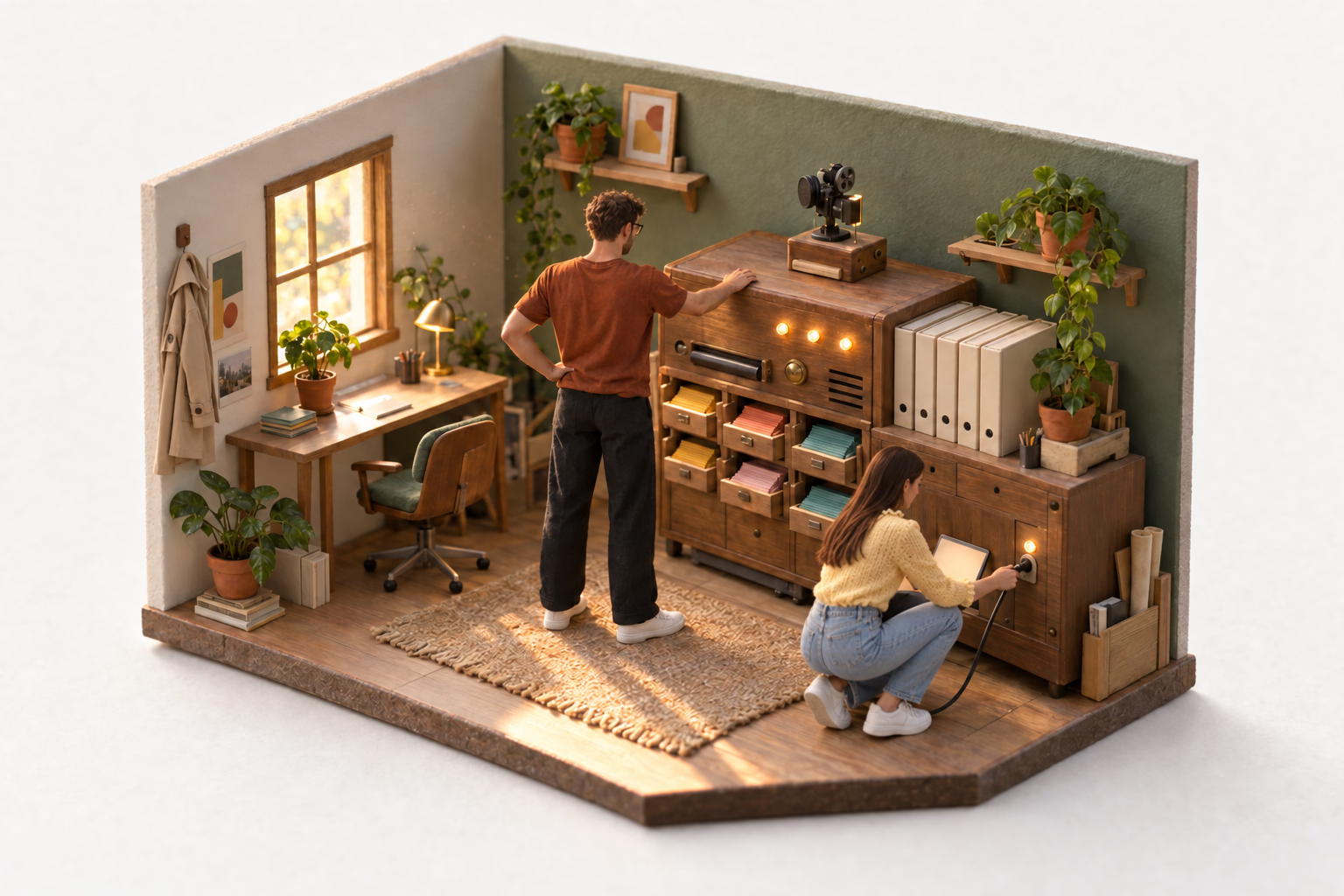
Clavard, one of my projects that's shut down now, started as a favor. My piano teacher kept fixing mistakes in the sheet music I bought, and one day I asked him if he could write his own, just better. It was meant for fun. He said yes.
It turned into an online store for piano sheet music. Classical pieces by Dvořák, Smetana, Chopin or Beethoven, each arranged for several levels, from easy to hard, some of them for four hands. Every level had a recording by Eliška Tkadlčíková, an incredible pianist and one of the rising stars of Czech piano, so you could hear it before you paid $8 for it.
I wrote all of its code. 618 commits between December 2020 and March 2024. The store, the payments, a back office, a tool that pulled the scores out of Flat.io, where they were written.
And I couldn't make a single thing it sold.
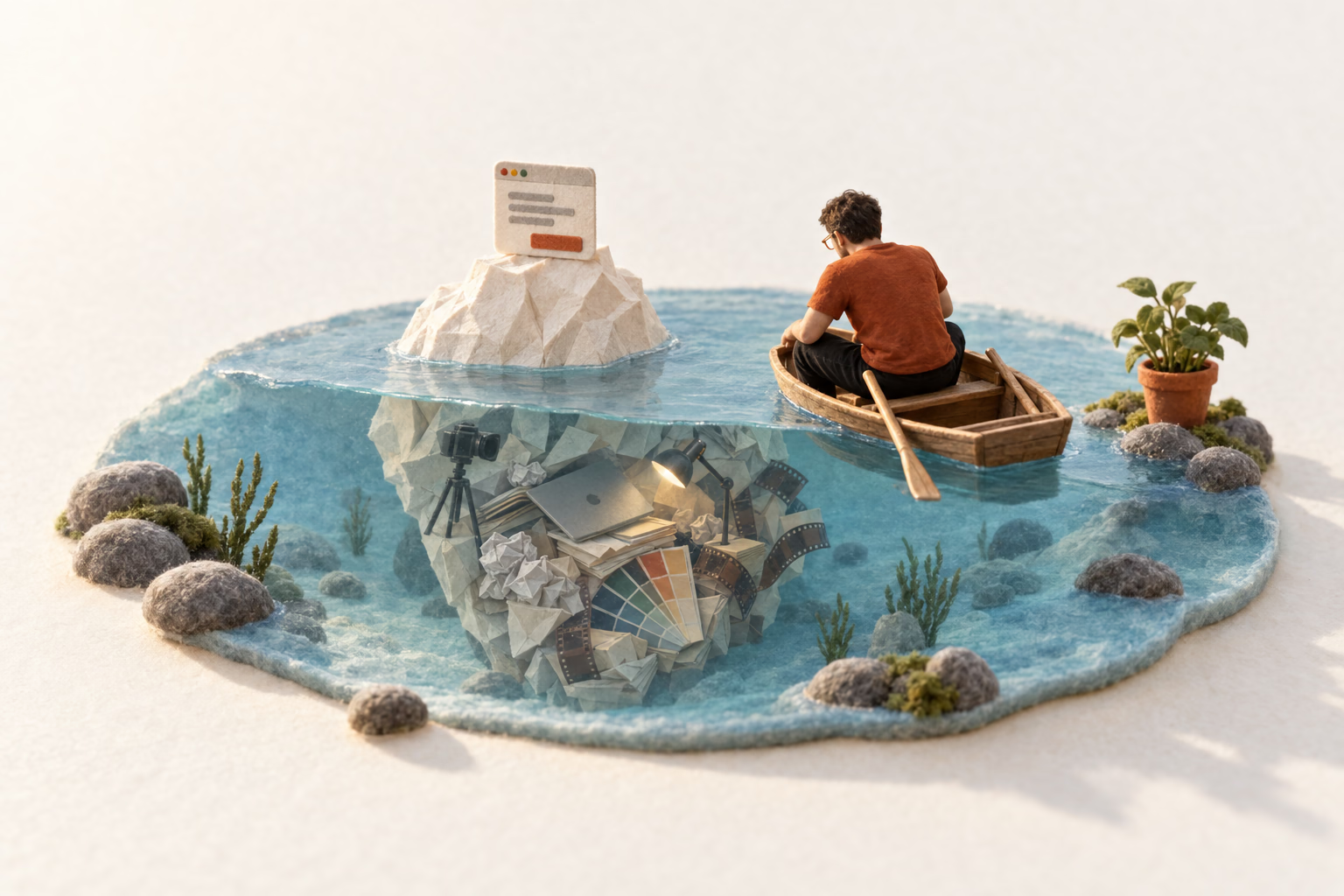
TL;DRClavard didn't die because the money ran out. It died because I couldn't make, judge or steer what it sold, and the people I paid were building the system for me instead of the other way round. Accelerators ask how big your idea is. The question I ask now is whether I can keep a project alive alone, and I only pick the ones where the answer is yes.
I was the orchestrator
My teacher Jiří, a conductor, wrote the arrangements, paid by the hour. Eliška recorded them and checked every score. A branding studio came up with the name, out of more than a hundred options, and the visual identity. That cost me about $7,000.
My job was the code, and keeping everyone else moving. I was a programmer and an orchestrator of other people's work. The worst part was that I couldn't challenge any of it. I knew very little about music theory, and I'd only just started playing the piano myself. I couldn't question their work, their decisions or their opinions. I wasn't from the field.
In the first twelve months I paid about $6,300 just for the arrangements. In the end the store had 48 of them: 18 pieces by 12 composers, each in two or three levels. After the start of 2023, no new ones were written.
It wasn't that the money ran out. I could have paid for more arrangements. But I felt the direction and the quality of the pieces weren't where they had to be to change anything in the market, and I couldn't improve them at the pace I wanted. More money would have gone down a well. I didn't have a system I could give those people. It was the other way round. They were building the system for me. That was the stumbling block.
And there were so many ideas. I'd found a place where we could film beautiful videos of every arrangement. The concept was good. The price was high, but it was worth it, and I believe the market was there and still is. We could have sold printed sheet music, which has been a big hit in bookstores, and not only here in the Czech Republic. We could have made collectible cards of the composers, like the car cards I had as a kid with the engine and the top speed, only here it would be the year they were born and how many pieces they wrote.
But I felt that in this setup I wouldn't get there. I didn't have the kind of money the plan needed, and I didn't know the field well enough to carry it. The code was never the problem.
For another year I kept Clavard alive the only way I could. I published what was already arranged and paid for short videos, some from a creator in Melbourne, a few from Fiverr. Nothing new was coming. My last commit is from March 2024.
For everything that made up the product, the sheet music, the recordings, the plans, the ideas, even the marketing videos, I needed other people. They weren't working for me. I was working for them, and I didn't even realize it.
The question accelerators don't ask
When you apply to Y Combinator, or any accelerator, everyone wants the big idea. A billion-dollar business. I applied with Edicek last year, and they rejected me.
What almost nobody talks about is what happens when the business stops working. The money doesn't come, or you hit some other wall on the way. At that point the size of the idea doesn't help you. What helps is whether you can keep going on your own. Keep iterating and improving it, keep it running, keep answering support. Make sure it keeps moving and doesn't die, or at least doesn't look like it's dying, so the people who use it, or might buy it, don't start to wonder. The show must go on.
So the question I ask now is simple. If it all goes wrong, can I keep iterating on this alone? Maybe slowly. Maybe only at the minimum quality people will accept. But alone.
Your goals are (NOT) too small
Some of my friends tell me that. That some of my goals are unnecessarily small.
I don't agree. The people I know with huge goals end up disappointed, because without clear funding up front they can't get there. I'd rather have a goal I can reach with what I have.
The first one I can carry
Edicek is the first project where I cover all of it. Not just building the product, but the distribution too. I made the brand, everything but the logo. I made the tool I make the animations in. I made the website and the system that generates the illustrations. I record the YouTube videos and write the posts, this one included.
It runs on very little. If everything fell apart tomorrow, I could keep going.
Ten years ago, every part of a project like this was a person I'd have to find and pay. An illustration meant a designer. A product video meant someone with a camera. A brand meant an agency, and for Clavard it literally did.
Today most of it is a tool and a bill. The illustrations come from OpenAI, generated against a brand I wrote down once. The animations come from a video tool I built with Claude Code. When I want to film something, I drive to a studio I rent, where the camera and four lights are already set up, and nobody else has to be there.
I don't have to ask anyone or wait for anyone. When I get an idea for how to make something better, or for a new feature, I build it myself and see whether it works.
Even Edicek started differently. I worked with a designer on the logo and the brand. The logo is the only part of her work I still use; I redid everything else. And I waited weeks for each piece. She moved at maybe 5 percent of the speed I needed to release things the way I wanted.
That's why I think my old projects would get much further today, even with the experience I had back then.
Not Clavard, though. I don't think any tool would have written those arrangements at the level my teacher did. The problem was never the tools. I picked a product whose core I couldn't make myself.
If Edicek gets investment one day, I'll hire. Marketing first, then video. And they won't start from a blank page.
I'd still take the money. I just won't build anything again that dies without it.