This week I shipped Edicek 1.11 and made the release image for the changelog out of two images. One was the backdrop, four cut-paper arcs in blue, orange, yellow and green. The other was the number, dark navy, cut from the same paper. Both had transparent backgrounds. I stacked them in my Figma template and sized each one to the layout.
That image is the first thing I've made with ChatGPT Image 2.5. Everything Edicek looked like until this week was generated with 2.0. All the illustrations, all the standalone objects, every changelog image, every picture on a blog post.
I had exactly two problems with 2.0. Both are gone.
TL;DRGPT Image 2.0 lost quality every time you iterated and couldn't give you a transparent background, so I generated the same prompt over and over instead of editing, and cut backgrounds out by hand in Figma. 2.5 fixed both, and the practical win is that picking a good variant is now the end of the work instead of the middle.
Every edit made it worse
Our style is paper collage. Layered cut paper, visible grain, flat color.
With 2.0, asking for an edit was a gamble. I'd say make the number bigger and it came back with a different grain and shifted colors. The first generation was always the best one. The second was rougher. By the third it wasn't my brand anymore.
So I stopped iterating. I'd throw the result away and run the same prompt from scratch until one came out right. Sometimes that was the first try. Sometimes I burned thirty generations before something was usable.
That worked. But it isn't iterating. It's rolling dice.
The shadow I didn't want
The second problem was that everything came welded onto a background.
That hurt most with objects meant to stand on their own, an icon on a slide, a shape in a deck. I've cut about twelve of those out by hand in Figma. Three minutes each, so not a real time sink, more a small tax I paid every time.
The shadow is what made it worse. When the style is stacked paper, the model bakes a drop shadow into the layer itself. I didn't want its shadow. I wanted the shape, so I could put my own shadow under it in Figma.
Sometimes the cut worked and I did exactly that. Sometimes the shadow sat close enough to the object that Figma couldn't separate the two at all, and no amount of clicking got me a clean edge. Those ones I had to throw away and generate again, hoping the next one came back with a shadow I could get rid of.
What 2.5 actually changed
I can iterate now without watching the quality drain out of the picture. And I can ask for a transparent background and get one.
The release image is the proof. Every release still gets a fresh concept: new backdrop, new text, ten variants, pick the best one. That part hasn't changed.
What changed is what happens after I pick. It used to be that the winner came back as one finished picture, it didn't quite fit the layout I needed it in, so I'd go back and generate ten more. Now the winner comes back as separate transparent images and I size each one to whatever that layout needs.
This is the 1.11 release image with both elements in one picture:
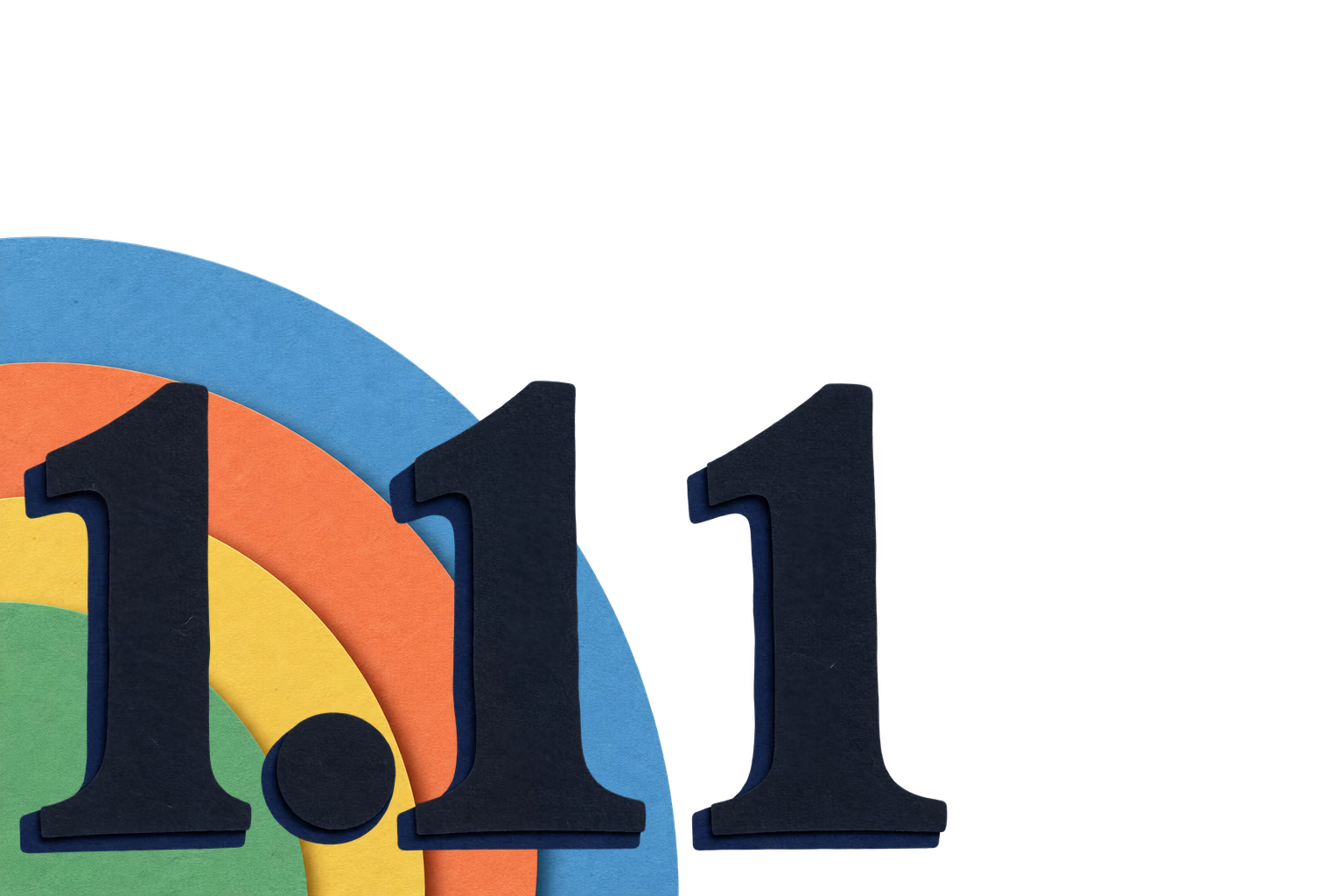
And this is the same image as the two layers it's actually built from, each one transparent on its own:
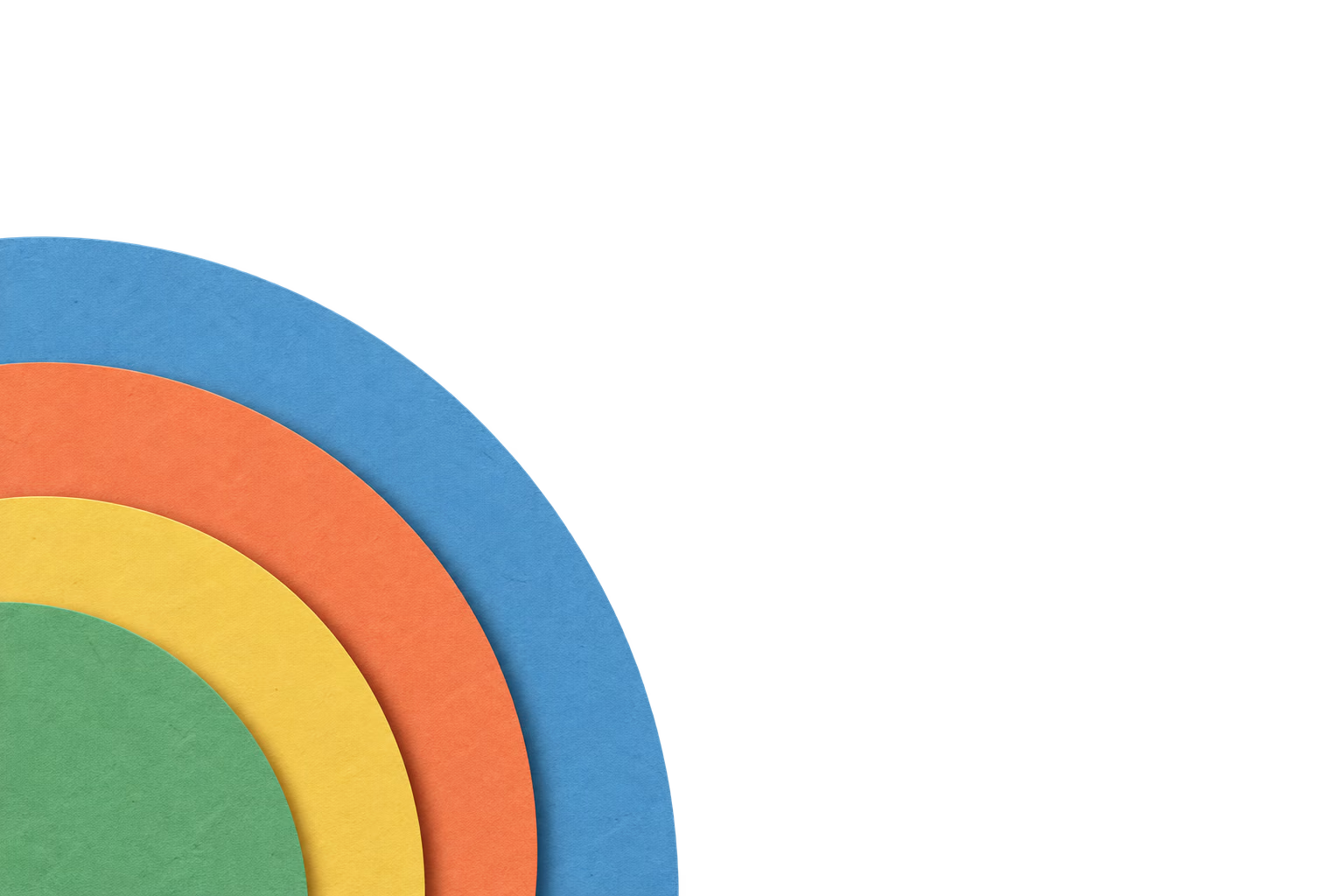
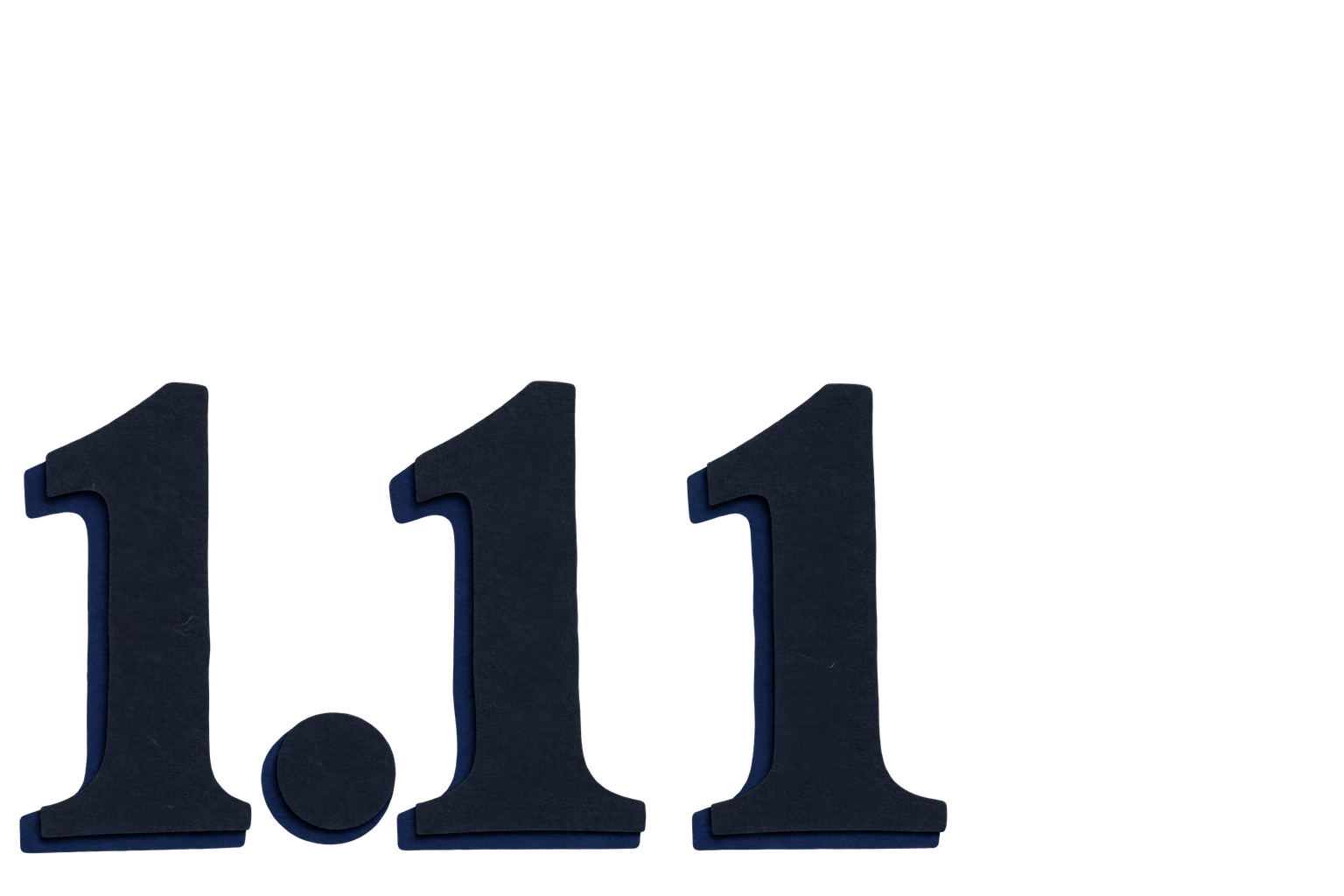
With 2.0 the second and third of those images didn't exist. There was only the first one, and whatever I wanted to do with it, I did to the whole picture at once.
Picking a favorite used to be the middle of the work. Now it's the end of it.
Why cheap variants matter more than they sound
Last September I paid about $6,000 for Edicek's brand identity. Colors, logo, the system underneath it. It looked great in the deck, and that was the problem. It was all done at a high level and I was never shown it applied to anything. A few months later I started applying it myself, to the website, to Twitter, to the app, and it didn't fit.
So I rebuilt it myself out of my own iterations.
That only worked because of how the economics changed. A designer hands you one direction, the best one in their judgment, maybe two if you asked nicely. And you wait for it. Days if you're lucky. I was usually waiting weeks.
That isn't a complaint about designers, it's what the economics allow. Every variant costs somebody a day of their life, so nobody is going to burn a week showing you the twenty they threw away.
I generate ten. Sometimes fifteen, sometimes twenty. It takes minutes. Twenty mediocre options tell you more about what you actually want than one good one does.
The system is the expensive part
None of this would be fast without what sits underneath it. I know how Edicek's illustrations look. I know the colors, the paper, how the layers stack, what a release image is supposed to feel like. That took months to settle.
Once it's settled, everything after it is quick. A release image, a slide, an icon, a social image, they're all variations on rules that already exist.
You look at one of these illustrations and it looks easy. Some cut paper, a couple of colors, done. Making one is easy. Making forty that look like they came from the same place is not, and that's the part nobody sees when they look at a single picture.
It's worth the investment anyway. Once the system holds, every next image costs a few cents and nothing else. No brief, no waiting, nobody else's calendar sitting between me and shipping the thing.
The model got better at the two things that were slowing me down. The reason that matters is that everything around it was already in place.